
Date: 8th of February 2026
Location: Kakapo Canyon, Fiordland National Park, NZ (v5a3IV***)
Party: Person A, Person B, Person C, Author
Conditions: ~80 mm of rain in the preceding 48 hours, major geomorphological change to the canyon since 2025.
What was planned as a moderate-flow canyon descent turned into a four‑hour in‑canyon rescue. On the second drop, Person A became trapped on a precarious ledge beside a 55m waterfall after being battered and stripped of gear. Getting him out required placing several bolts, delivering gear across whitewater, and rigging a guided rappel. We all exited without major injury, but it was a close call.
The incident came down to a few compounding factors: highly elevated water levels, extensive anchor damage and landscape changes, and Person A committing to a drop before fully assessing it. Individually, these factors may have been manageable, but together they set the scene for a near miss.
Approach
We’d originally planned to do Falls Creek on the 8th, a more challenging canyon. But after two days of rain, we swapped it for Kakapo, thinking the lower aquatic rating would be the safer choice. We left camp at 7:30 am and started the approach at 8:40.
The first sign that we’d underestimated conditions came at the Tutoko River crossing. We walked upstream until we found a flatter river section and crossed using a group huddle. Even then, it felt at the upper limit of manageable – each of us had a moment where we surely would’ve been swept away if it weren’t for the huddle’s support. However, the first descent team had said that the river crossing was challenging, so we didn’t think too much of it. In hindsight, this assumption was flawed; ‘challenging’ is a broad term.
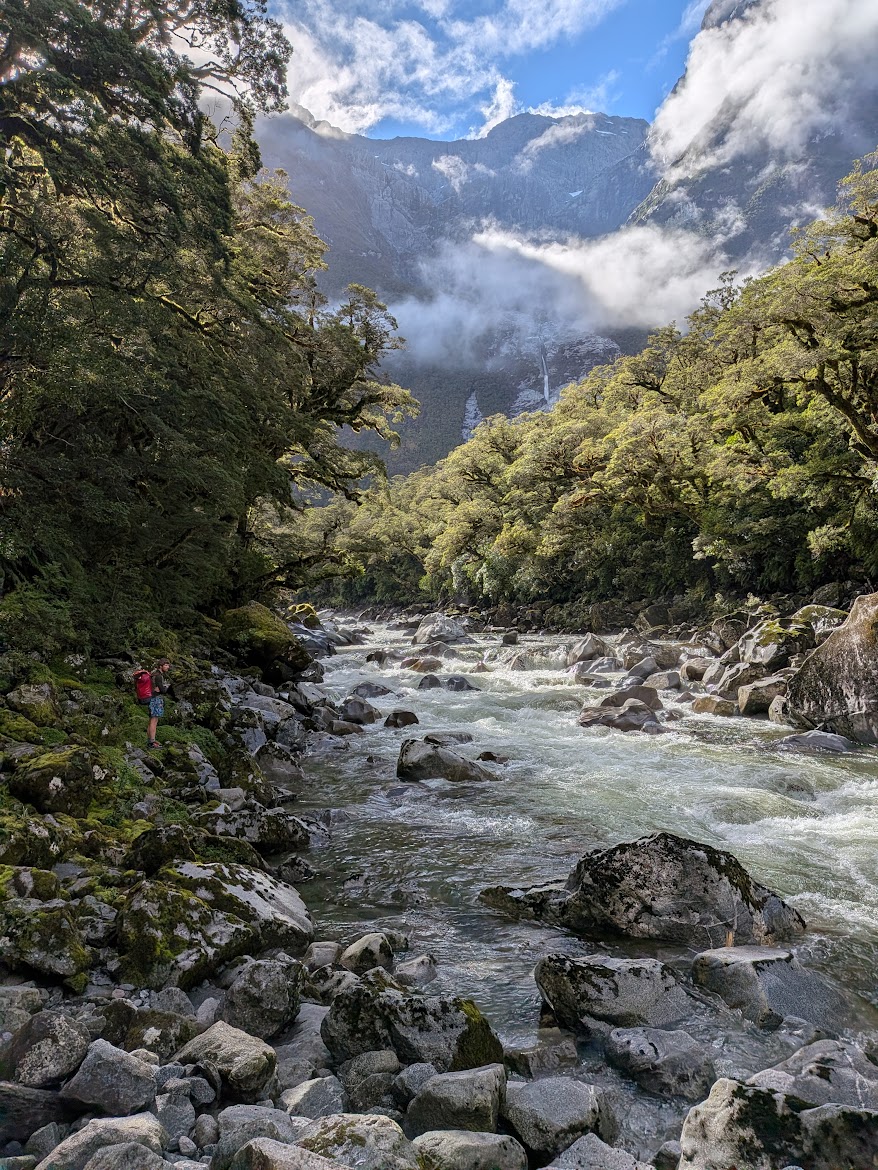
Heading upstream on the Tutoko River to find a better place to cross. Note the upper section of Kakapo in the distance.
The remaining walk to the top involved a slog up a decent hill. Once at the top, we reviewed the track notes and noticed that the January 2025 photos showed vegetation covering the slopes to either side of the canyon. Slopes that now showed bare rock. A large landslide must’ve come through since the last descent in March 2025, which raised concerns about the state of the anchors in the canyon. We’d taken a drill and 10 bolts, plus webbing, but the scale of damage suggested we might need more than that to cover the 18 drops.
However, we knew there were escapes throughout the canyon. So we made the call to start the descent, assess the anchor damage, and bail out if needed.
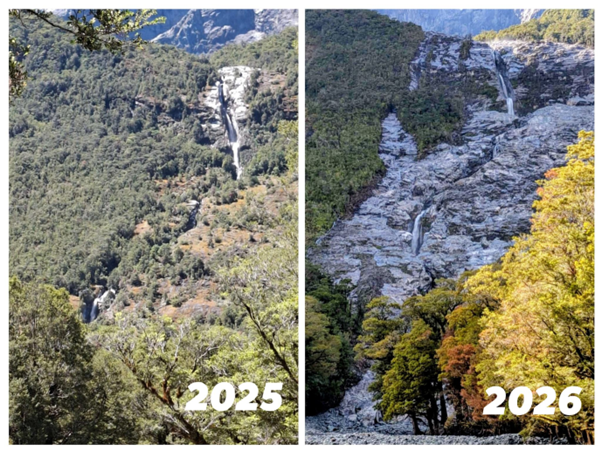
A side-by-side comparison of the canyon, as seen from below, in January 2025 vs February 2026.
Drop 1
Sure enough, the first drop had no anchor. We installed a single bolt with a removable Petzl Pulse as backup and drew up a plan. I’d descend first, scout ahead, and signal for the other to follow if it looked reasonable. If not, they would place new bolts and rig a dry line for me to ascend out.
The drop contained an intimidating amount of water. I had left my pack at the top to zipline down later, but even still, I spent a good few minutes a couple of meters down, pretending to assess the features, but really thinking about bailing back up. When I finally went for it, the flow wasn’t as bad as I had imagined.
At a downclimb, I rigged a handline so I could reverse back up to get line-of-sight to the team when needed. Eventually, I found and verified an escape where we could reassess conditions, so I returned to signal the others. From placing bolts to packing up the bottom, drop 1 took nearly two hours. With 17 to go, we felt the time pressure.
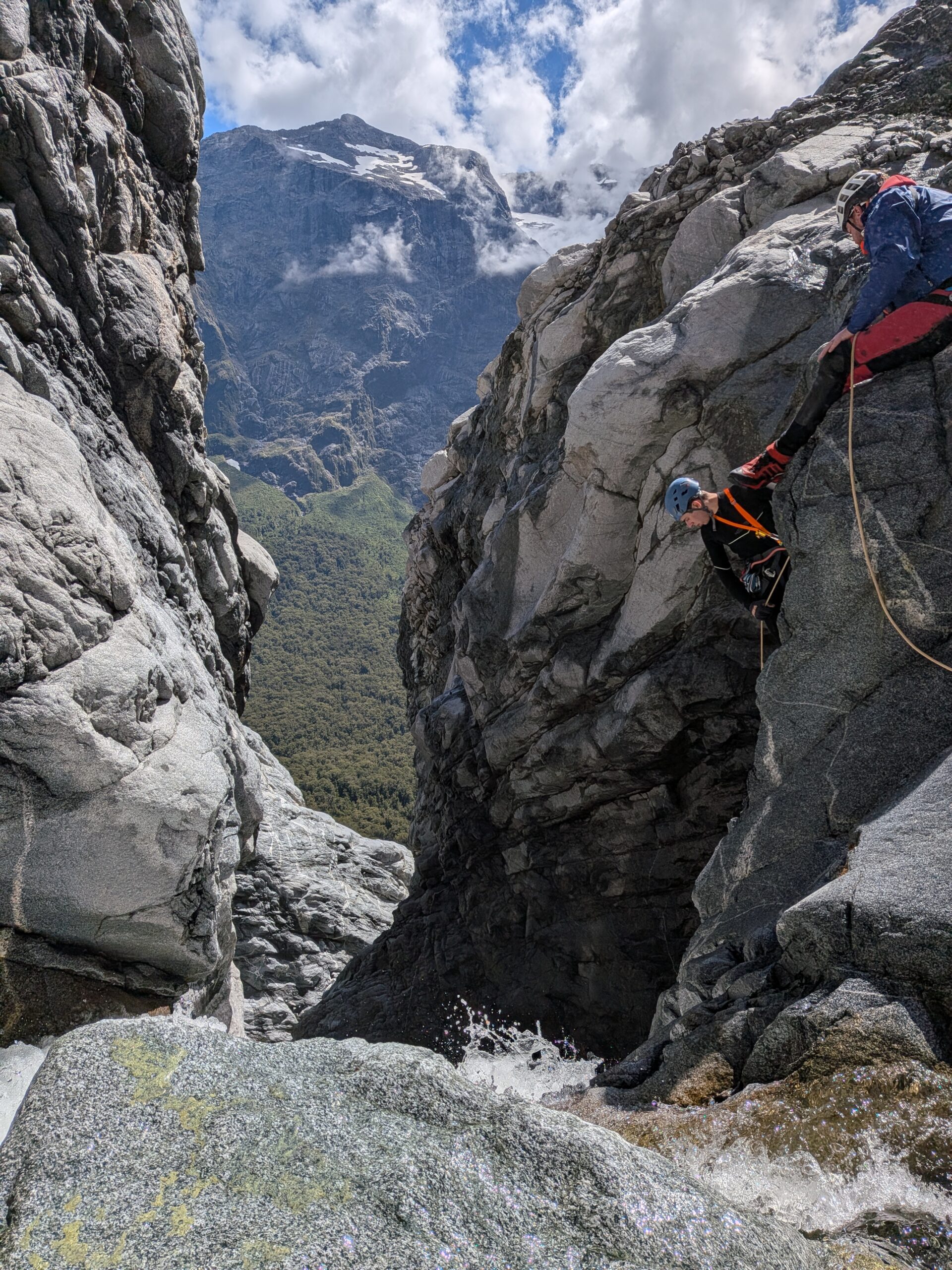
Me assessing the first drop.
Drop 2 – the incident
At the top of the 55 m second drop, Person A investigated the existing wet line and found the bolts destroyed. The topo had flagged this drop with a “strong vertical flow” warning, which looked particularly applicable with the current water level, so this line wasn’t an option. Instead, we took the escape to the river right and bolted a new dry line from the side.
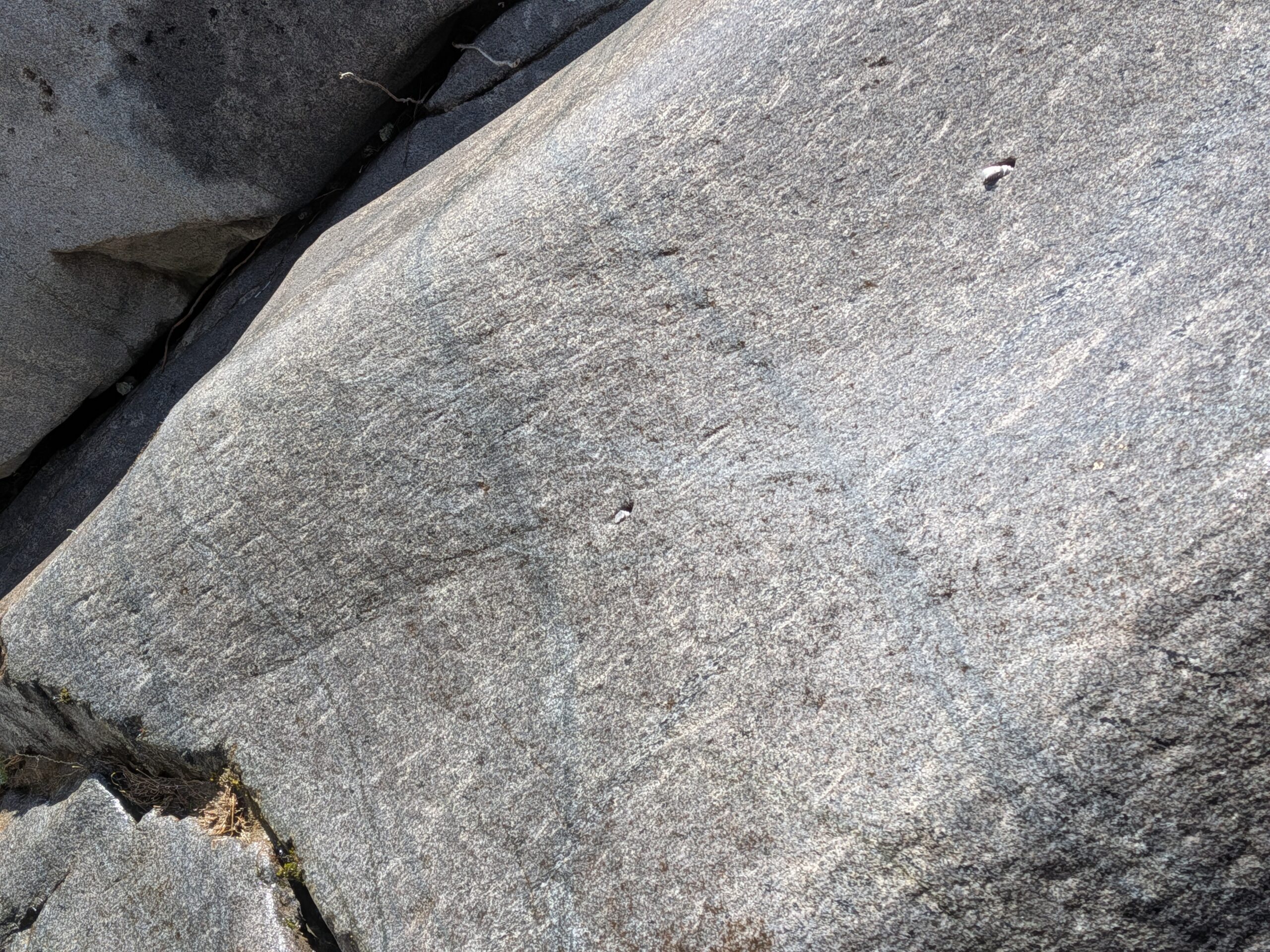
The demolished bolts at the second drop.
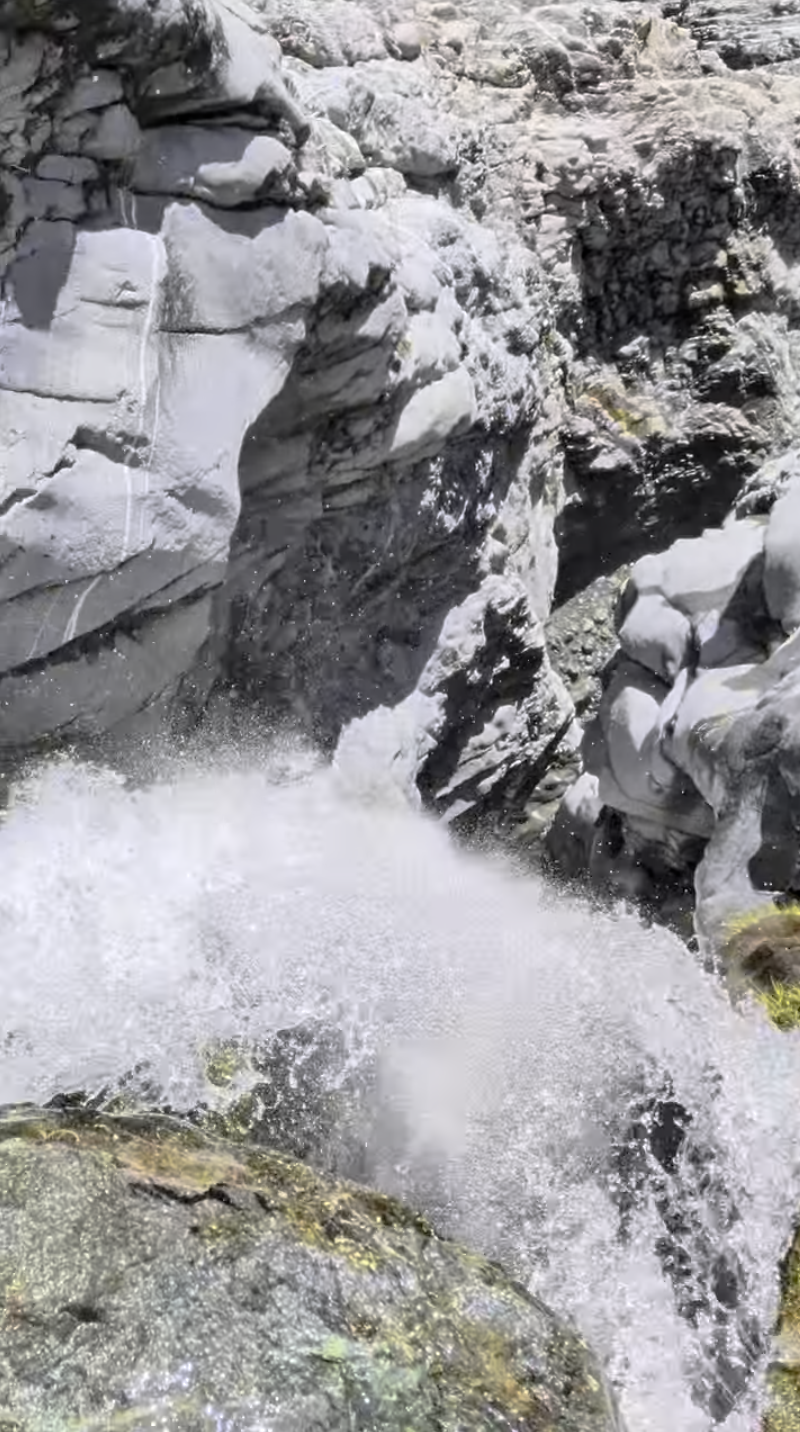
Looking down towards the wet line of the second drop.
Person A began the descent. A few metres down, he calls back: “It’s still going to be a little wet.” What none of us had accounted for was how far the waterfall travels horizontally over 55 metres of free-fall. The dry line wasn’t as dry as we’d thought. Then he abseiled out of sight.
We waited. The first person down often takes longer while assessing features. But 15 minutes passed with no communication and the rope still weighted. Two whistle blasts received no reply.
Person C suggested lowering. If Person A was stuck in the flow – either stuck on the rope or not having enough to reach the bottom – he might not be able to whistle, or we simply couldn’t hear it. While this was a plausible scenario, it wasn’t the only one. Lowering someone you can’t see without knowing their situation could make things worse, so we held off.
Instead, we set up a second line. Person C abseiled to a ledge partway down for a visual check, then ascended to report back: no sign of Person A, but his pack was visible, abandoned, caught in rocks downstream.
Half an hour had now passed. We tested that the rope was still weighted again, tugging a little harder to make sure, and got a single whistle blast in reply – our first communication from Person A. Person C went back down to the ledge, and after a few more minutes watched Person A burst through the veil of the waterfall onto a sloping ledge on the opposite wall.
What Person A told us afterwards:
He had tried to push through the waterfall 17 times. The force of the water had made him abandon his pack, ripped off his helmet and gloves, and partially opened his wetsuit. He was cold, exhausted, and standing on a small ledge above a pool of violent whitewater, preventing further descent. Going back up would mean crossing the flow of the waterfall again.
The rescue
Now that Person C had eyes on Person A, they could communicate via hand signals. From what Person C could interpret, Person A wanted someone to abseil in further downstream with the drill and set up a guided rappel.
We placed new bolts downstream for another abseil – definitely dry this time. With only three ropes total, and one inaccessible in Person A’s abandoned pack, we had to untie the pull-down side of Person A’s line to rig this new drop. I abseiled down with the drill. Person A was standing on a small ledge on river left, beside the waterfall, with the whitewater pool, about 10m below him.
Person A signalled that he wanted the drill. He gathered and threw the bottom of the rope he had descended on, which he was still tied into, but it was a few metres short of reaching me. He blew three whistles, hoping for more rope from above, but I knew that it was already at full length.
The water between us looked too fast to swim against. Instead, I ascended a few metres up the rope I’d come down on and started swinging, kicking off the canyon walls, until I landed on a ledge a little closer to Person A. When he threw the rope again, I could just reach it, and I tied the drill bag to the end.
While Person A drilled a bolt beside his ledge, I went and retrieved his pack from where it had snagged in the rocks. Unfortunately, the keg, containing Person A’s phone, InReach, bank card, and licence, had been swept over the next drop. But the most important item – his rope – was still there. When I returned, Person A once again blew three whistles for more rope. At the top, Person B and Person C started hauling my rope so they could lower Person A’s. I liked the options that rope gave me and didn’t want to also become stuck in the canyon, so I whistled to stop. To get the spare rope to Person A, rather than ascending my line again, I decided to try fight the current. The water here turned out to be chest deep, so I managed to shuffle close enough to tie Person A’s pack – containing the spare rope – to the bottom of his line. The spray was so intense here that I was working blind.
Person A pulled up his bag, rigged an abseil off the bolt he placed, tossed me the ends, and signalled for a guided rappel. I found a natural anchor – a pinch between a boulder and the canyon wall – and set one up. He used it to abseil safely past the dangerous whitewater feature and down to me.
Person A was too exhausted to ascend the free-hanging 55m drop that I came down on. He pointed slightly further downstream, where there was a sloping wall that looked much easier to ascend. I went up the free-hanging drop, hauling Person A’s pack and the drill bag up behind me, and asked Person B and Person C to bolt a new line above the slope. They did, and Person A made it safely to the top.
From when Person A started his descent to when he was safely back at the canyon rim: four hours.
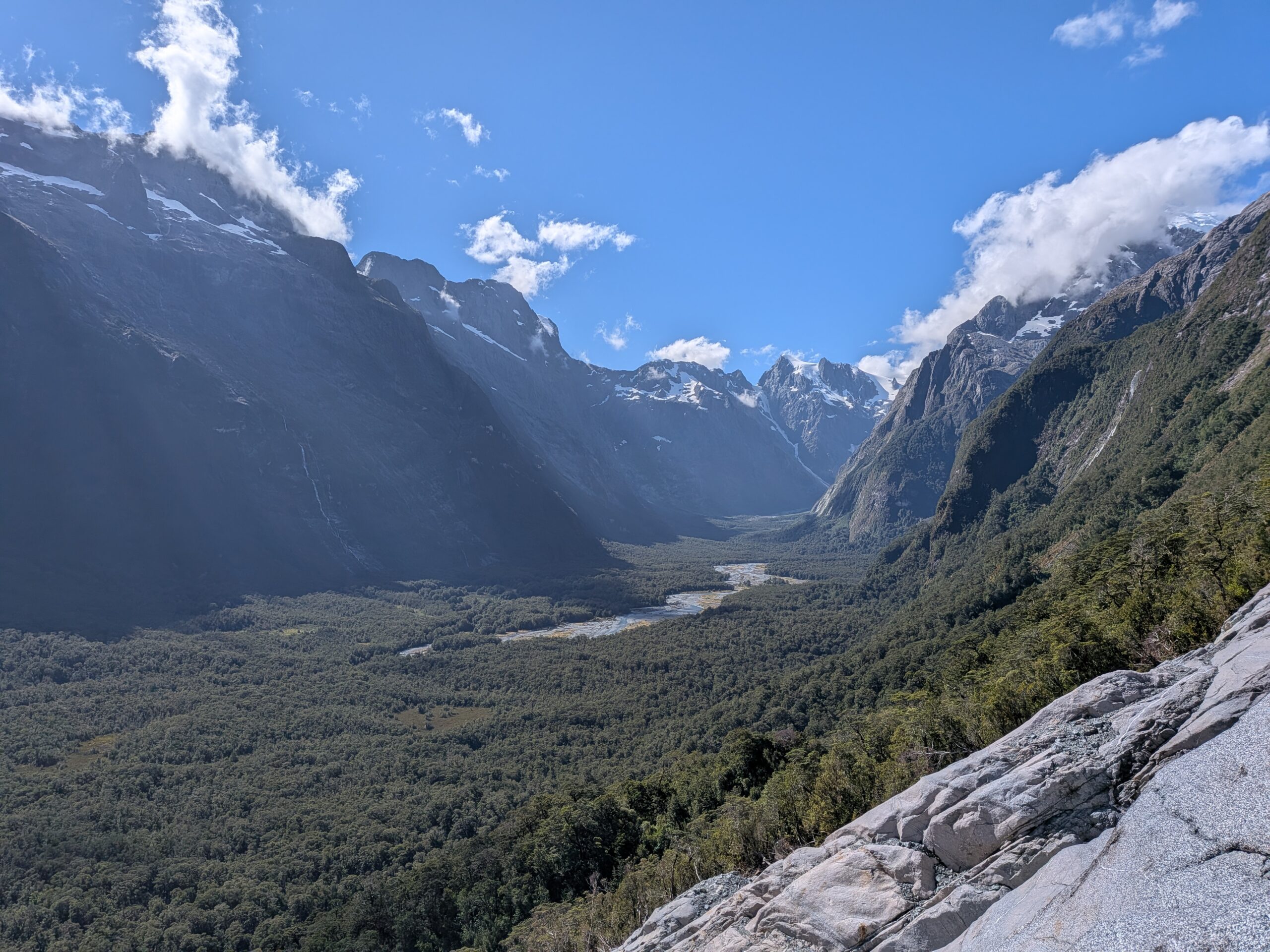
The views that Person B and Person C got to enjoy while Person A and I were stuck in the canyon. #jealous
Getting Back
We descended the rock slabs on river right, using improvised meat-anchor abseils to assist person A where necessary. We tackled the Tutoko River crossing by group huddle again, at the same spot. The rest of the walk was on a tourist track, mostly in the dark.
Total time elapsed: ~14 hours.
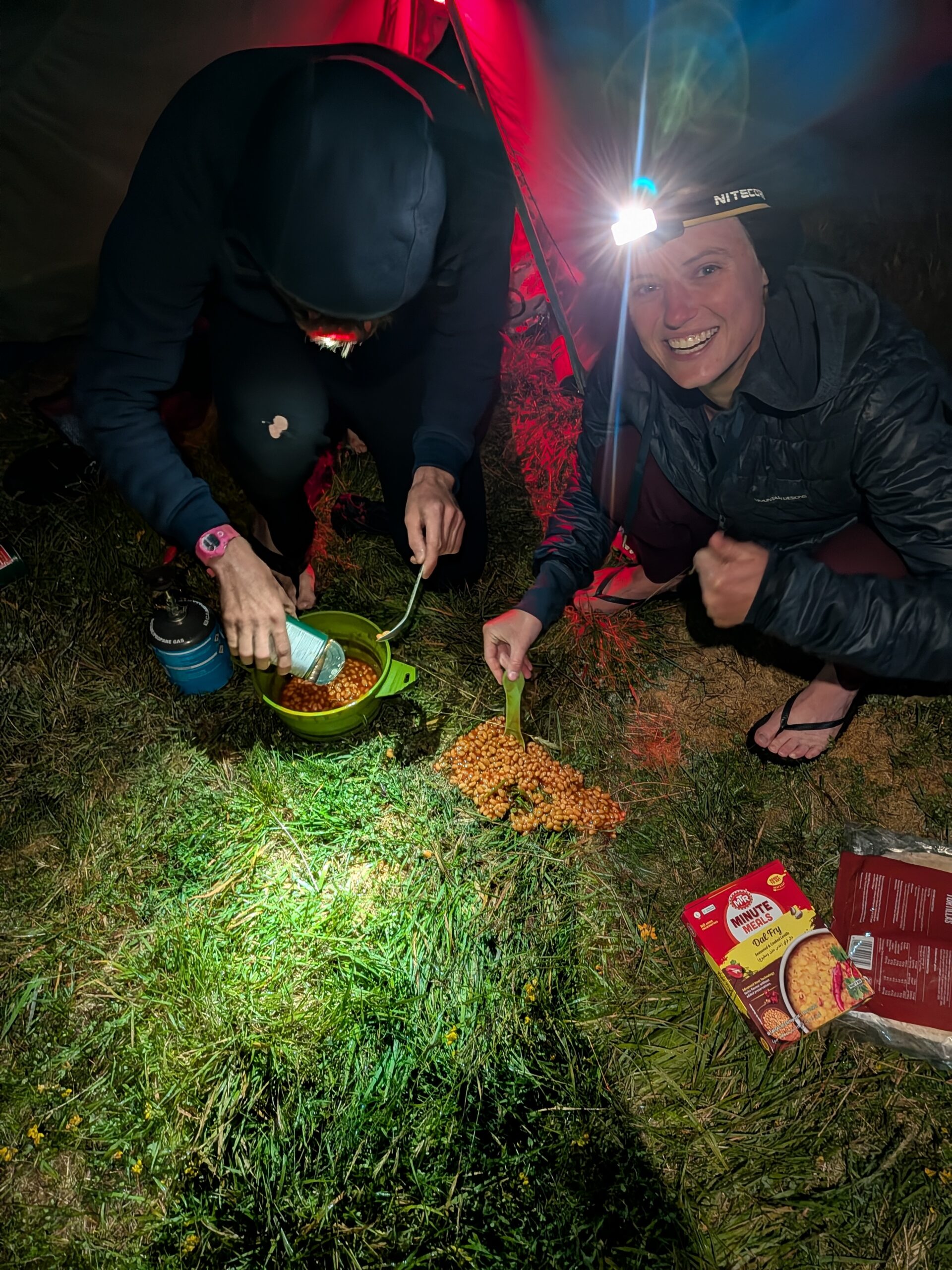
Kiera generously feeding us a dinner of baked beans and dahl at camp because we were too tired to cook anything. The beans apparently needed some grass for extra flavour.
Key Takeaways
A few learnings stood out from this experience:
Line-of-sight before action.
We couldn’t make good decisions until we could see Person A. Lowering or hauling someone you can’t see is as likely to hurt them as help them. Establishing line-of-sight was the right call to prioritise, even when every instinct is to do something. Agree on your whistle and hand signals with any new group before you’re in the canyon – by the time you need them, it’s too late to agree on them.
Grades have limitations.
Canyon grades show a snapshot of the difficulty of the canyon’s hardest feature on a particular day with a particular flow level. If the flow is ‘just a little higher’, that doesn’t necessarily mean the hazards will be ‘just a little harder’. We chose Kakapo over Falls Creek because of its lower aquatic rating, but that logic has limits. Canyons with high vertical grades and lower aquatic grades often route abseils through the flow, and hence are disproportionately affected by elevated water levels.
Group size is a rescue resource.
It took all four of us to pull this off. If we’d only been a party of two, or if not all of us were technically proficient, this rescue would have been a very different beast.
Track notes go out of date.
The canyon had changed significantly since the notes were written. Anchors were missing, features were different, and the water levels were higher than any previous descent. Always be prepared to place new anchors and assess hazards for yourself.
Carry more gear than you think you’ll need.
Three 60 m ropes were barely enough once one became inaccessible. If the rock slabs on the river right were steep enough to demand a rope, or if Person A’s rope had been swept down the canyon, the situation would have been much more difficult. Additionally, I carry what some would consider a ridiculous amount of hard gear, but I used almost all of it at some point.